Iranian Rial Weakens Against PKR and USD Amid Renewed US‑Iran Conflict
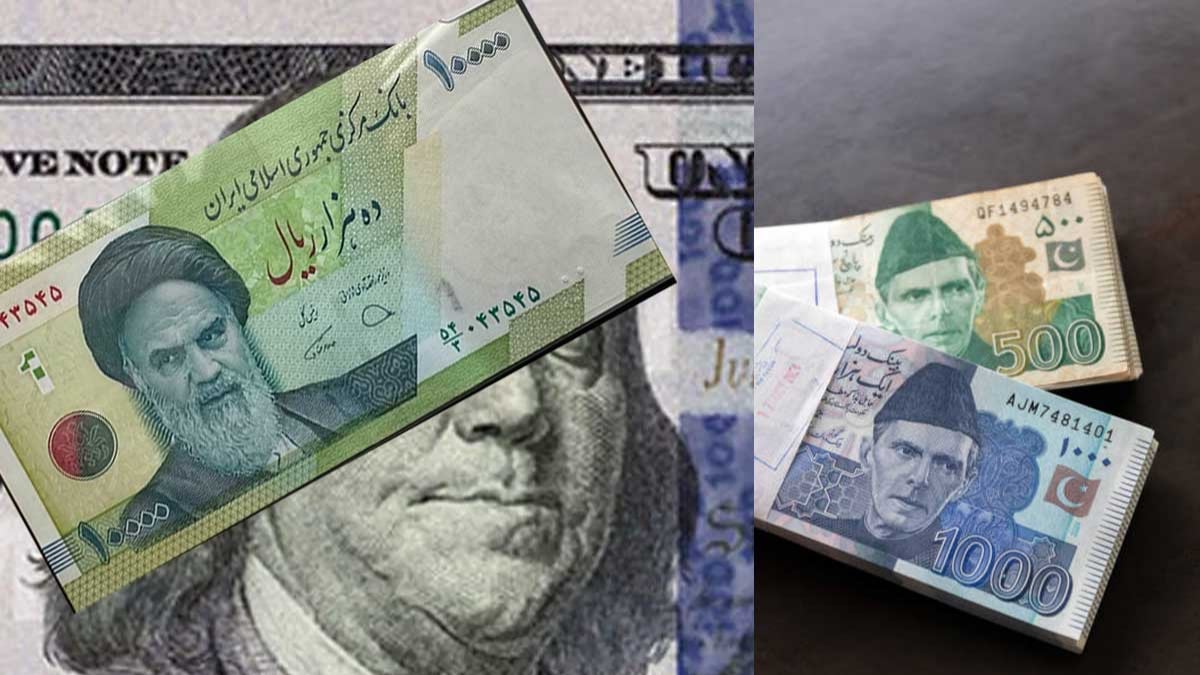
The Iranian rial slipped further, trading at about 5,858 rials per Pakistani rupee, while oil prices surged toward $100 a barrel after heightened US‑Iran hostilities in the Gulf.
Share
Desk Analysis
How This Affects the Exchange
Sector Effect
Negative · Do not buy
Rising oil prices and heightened geopolitical risk weigh on Oil & Gas, Economy and overall market sentiment – avoid buying.
Sectors & Direction
Desk read
Desk call: Do not buy · Negatively affected
- Oil & GasNegatively affected
- EconomyNegatively affected
- MarketsNegatively affected
Companies
Mentions in This Briefing
Sectors: Oil & Gas, Economy, Markets — Negative · Do not buy. PSX tickers: MEBL, MCB, UBL, HBL, BAHL, FABL. Rising oil prices and heightened geopolitical risk weigh on Oil & Gas, Economy and overall market sentiment – avoid buying.
Full Story
Open on ARY News## Currency Movements
The Iranian central bank reported that the rial continued to lose value against most major currencies. One Pakistani rupee bought 585,842 rials, up from 583,516 the previous day, translating to roughly 5,858 rials per PKR. The US dollar rose to 1,624,371 rials, and the euro traded near 2.68 million rials on the black market. Other hard currencies also strengthened: the euro at 1,888,746 rials, the British pound at 2,199,693 rials, the Swiss franc at 2,007,759 rials, the UAE dirham at 442,307 rials, and the Saudi riyal at 433,166 rials.
## Market Reaction in Pakistan
In Pakistan’s open market, the rial remains a sought‑after currency, though demand has eased since the war’s restart. A standard packet of 1 crore rials now changes hands for PKR 5,000‑6,000, down from the PKR 8,000‑10,000 range seen in April, yet still above the official rate set by the State Bank of Pakistan.
## Geopolitical Context
The depreciation comes as the US‑Iran conflict entered a later, more intense phase. Earlier this month, US forces destroyed five Iranian crude carriers in the Gulf of Oman and near Kharg Island after Iranian attempts to target a US warship. Iran retaliated with ballistic missile strikes on a US‑linked base in Jordan and claimed attacks on US vessels and tankers in the Strait of Hormuz. These escalations pushed Brent crude toward the $100 per barrel mark.
## Implications for the Pakistani Market
Higher oil prices can increase input costs for a range of industries and add inflationary pressure, potentially weighing on the broader market sentiment. At the same time, a weaker rial may raise the cost of imported goods and affect companies with foreign currency exposure. Investors should monitor the evolving security situation and its spill‑over effects on oil‑related stocks and the overall market.